

News | The Team Preparing Los Angeles for the 2028 Olympics and Beyond
Stop the VideoNews
METRANS UTC
The Team Preparing Los Angeles for the 2028 Olympics and Beyond
Sunday, September 27, 2026
by Chinyere Cindy Amobi
Note: This article first appeared on USC Today

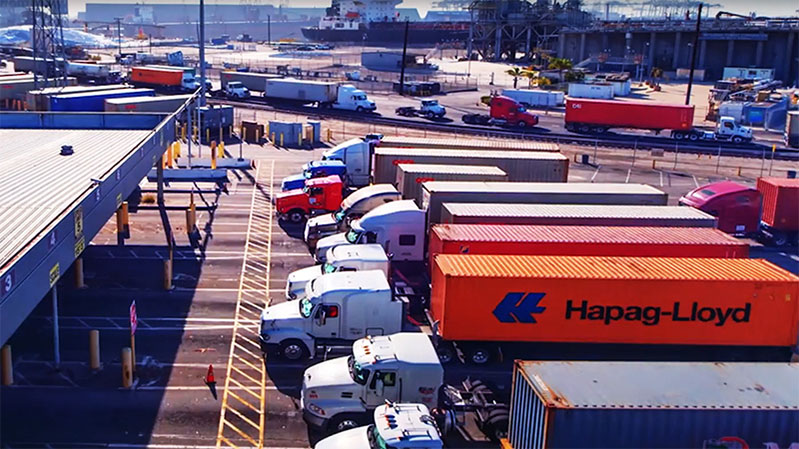
Photo: Shutterstock
As Los Angeles prepares to host massive global events in upcoming years, including Super Bowl LXI in 2027 and the 2028 Olympic and Paralympic Games, researchers at USC are working together to anticipate and solve the inevitable transportation challenges that will arise from a huge influx of people into the region.
The METRANS Transportation Consortium was founded in 1998 as a partnership between USC and California State University, Long Beach. Within USC, researchers from the USC Viterbi School of Engineering and the USC Price School of Public Policy collaborate to solve transportation problems in the greater L.A. region through interdisciplinary research, education and outreach.
USC boasts a wealth of innovation at the intersection of AI and transportation, with impactful projects coming from METRANS and centers such as USC Viterbi’s Integrated Media Systems Center and the school’s Center for Advanced Transportation Technologies.
Abigail Horn, research assistant professor of industrial and systems engineering and lead scientist at the Information Sciences Institute at USC Viterbi, is a principal investigator for a six-month METRANS project combining AI, systems modeling and large-scale data analysis to create a framework for supporting travel predictions and real-time transportation challenges for the 2028 Olympic and Paralympic Games and future large-scale events in major cities.
“She’s been at the frontier of using these kinds of data,” says METRANS Director Marlon Boarnet, USC Price professor of urban planning and spatial analysis. Boarnet believes this kind of research can be expanded to include mitigation efforts for future natural disasters such as wildfires.
Horn will start by mapping the travel patterns of attendees at large events such as football games and concerts. In Phase 2, she’ll try to use this data to build an origin-destination matrix — a way to track where trips would start and end for the Los Angeles Olympics.
Other projects from the program include exploring the possibility of urban air mobility (composed of air taxis and drone delivery) during LA28 and beyond, reducing “deadhead” miles (time spent without passengers) in autonomous ride-hail vehicles, and modeling the operation of fully automated trucks in dedicated freeway lanes at times of low traffic to reduce rush-hour congestion and increase driver safety.
In addition to a focus on research, METRANS and other USC entities have a number of programs that are designed to support doctoral, master’s and undergraduate students and connect them to transportation careers, research and workforce development.
Boarnet says transportation is in the midst of several revolutions, including automation, data availability through GPS, the transition from internal combustion engines to electric batteries, and more.
“Here at USC and in the field, we could use these improvements to be more sustainable, close equity gaps and improve quality of life — or things could go in the other direction, to a world where all these services maybe increase equity gaps, create congestion, disadvantage particular locations and become only available to persons who are wealthy,” he says. “So, what we’re trying to do is develop the underlying research that could ensure that all of these innovations are improving quality of life for as many people as possible.”
News Archive
- December (1)
- November (6)
- October (4)
- September (1)
- August (3)
- July (4)
- June (3)
- May (7)
- April (8)
- March (10)
- February (8)
- January (7)
- December (7)
- November (8)
- October (11)
- September (11)
- August (4)
- July (10)
- June (9)
- May (2)
- April (12)
- March (8)
- February (7)
- January (11)
- December (11)
- November (5)
- October (16)
- September (7)
- August (5)
- July (13)
- June (5)
- May (5)
- April (7)
- March (5)
- February (3)
- January (4)
- December (4)
- November (5)
- October (5)
- September (4)
- August (4)
- July (6)
- June (8)
- May (4)
- April (6)
- March (6)
- February (7)
- January (7)
- December (8)
- November (8)
- October (8)
- September (15)
- August (5)
- July (6)
- June (7)
- May (5)
- April (8)
- March (7)
- February (10)
- January (12)
2026
2025
2024
2023
2022
2021
2020
2019
2018
2017
2016
2015
2014
2013
2012
2011
2010

Major Funders
Metrans Associate Partners